Pet care advice for cat owners
Everything you need to know about responsible cat ownership, explained clearly with a professional perspective.
Newborn kittens
Newborn kittens are born deaf and blind and are completely dependent on their mother.
Kittens’ eyes:
Kittens’ eyes open at around 2 weeks of age and remain blue until about 5 weeks old.
Feeding and raising:
Very young kittens, only a few weeks old, should be raised on milk replacer: kittens aged 1–2 weeks should be fed every 2 hours using a bottle. From 4 weeks of age, feeding frequency can be reduced (every 4–5 hours), and once teeth begin to appear, they can be offered small amounts of soft, junior food. From 6 weeks of age, it is advisable to gradually transition to dry food, feeding at least 3–4 times a day. The dry food can be soaked in broth at the beginning, making it softer; by gradually reducing the amount of liquid, kittens can easily get used to chewing harder food. Dry food is easier to portion, does not spoil even if left out for a longer time, makes daily intake easier to calculate, and is also more cost-effective. More frequent chewing can also help reduce tartar formation.
From 2 months of age (this is when it is advisable to separate them from the mother and take them from the litter) they should be fed 4 times a day. It is more practical to leave dry food available for them at all times, and in addition offer wet food or homemade food twice a day.
Feeding cats
Premium-quality pet foods are also available for cats (Royal Canin, Hill’s, IAMS), and no additional mineral supplementation is needed when feeding these. The most suitable diet can be selected based on the cat’s age, sex, and any existing medical conditions.
What should you not give your cat?
Milk often causes diarrhea in adult cats, as they are frequently unable to digest lactose. There are specially formulated cat milks available, which are a better choice.
Medications intended for humans or dogs are often fatal for cats! (The same applies to tick-control products for dogs that contain permethrin.)
Do not give raw meat or raw eggs to your pet, as the viruses, bacteria, or parasites they may contain can be fatal.
Avoid feeding large amounts of liver. Cats can easily become accustomed to it and may later refuse other foods. Regular consumption of more than 120–150 grams per week can lead to serious vitamin A toxicity, causing abnormal bone growth in the skeletal system.
Raw onion should be avoided, as even a small amount can cause blood-related disorders due to its essential oils. In such cases, the cat may become lethargic, may urinate blood, and may experience vomiting and diarrhea.
Too much fatty food can cause pancreatitis.
Bones can cause choking in cats, as small splinters may get stuck in the throat or injure it, and can even perforate the intestinal tract.
Occasionally, if a cat eats dog food, it is not a major problem. However, dog food cannot replace cat food. While there are many similar ingredients in both, cat food contains higher levels of protein, as well as more vitamins and fatty acids. A cat fed exclusively on dog food over time may develop serious malnutrition.
Chocolate, alcohol, sweeteners (xylitol), caffeine-containing drinks, grapes, and raisins can cause fatal poisoning!
Other important information
Body temperature:
Measured rectally, a normal range is 38.5–39.0°C; only values above this are considered fever.
Litter training:
It develops relatively quickly, and kittens usually learn to use the litter box easily (even as early as 1 month of age). It is advisable to choose silica-based litter (or a clumping type for easier cleaning), as it is more hygienic, hypoallergenic, requires less maintenance (one package can last for weeks, and only solid waste needs to be removed), and it also controls odors more effectively.
Brushing:
It is advisable to get cats used to brushing from a young age. Long-haired cats (e.g. Persian, Maine Coon) should be groomed with a brush, while short-haired cats can be groomed with a special comb such as a “Furminator.”
Vaccinations:
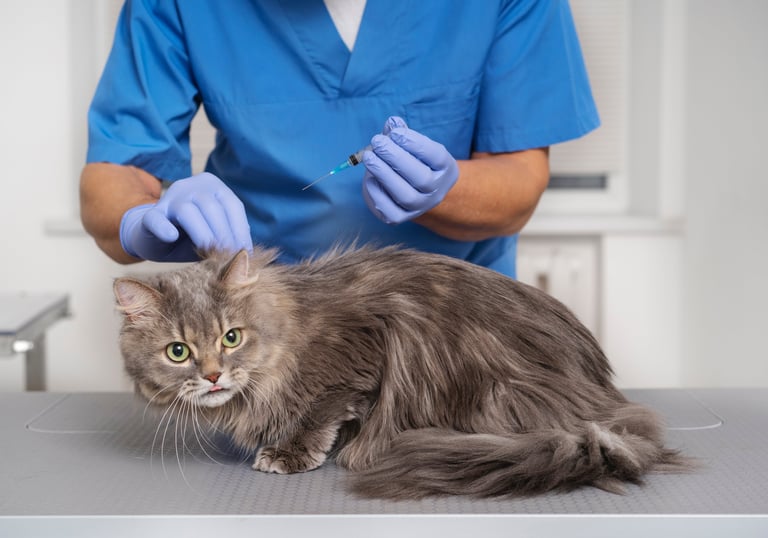
The first combination vaccine can be given from 9 weeks of age. This protects against feline respiratory diseases (rhinotracheitis virus, calicivirus) and feline parvovirus (panleukopenia virus). In the first year, a booster is required after 3 weeks to establish basic immunity, followed by annual revaccination. If your cat will have outdoor access (not kept strictly indoors) and is likely to encounter other cats, it is advisable to choose a combined vaccine that also includes protection against feline leukemia virus. Although more expensive, it provides broader protection with a single injection. This vaccine also requires repetition in the first year. Even for indoor cats, vaccination against feline leukemia should be considered, as it is difficult to predict whether your pet might temporarily be exposed to other cats (e.g. during boarding, visits, or if a stray kitten is brought home temporarily).
Rabies vaccination is recommended for cats that regularly go outdoors, especially in rural areas.
Deworming:
Since some parasites can be transmitted to humans (especially children), it is important to start deworming as early as 3 weeks of age and repeat it every 2 weeks. After 2 months of age, it is recommended every 3 months. If you keep multiple animals, make sure to treat all of them at the same time.
Diseases:
Various infectious and non-infectious diseases may occur in cats. If you notice any abnormalities in your pet, please consult your veterinarian. You can find more information on this in the section titled “When should you visit a veterinarian?”.
Neutering:
Cats typically reach sexual maturity at around 7 months of age. At this time, male cats develop a strong-smelling urine and begin to mark their territory with a characteristic, unpleasant odor. Neutering is recommended for both sexes from 6–7 months of age. In female cats, heat cycles normally occur at approximately 2-week intervals. During this time, cats become restless, rub against objects frequently, vocalize more, and may eat less. The heat period lasts about one week. After neutering, these symptoms disappear completely.
The surgical incision is very small (approximately 2–5 cm), so it does not cause significant discomfort. Most cats behave as usual by the second day after surgery.
Accessories:
In every household where a cat is kept, it is advisable to provide a suitable litter box and a scratching post. Cats can be easily encouraged to use the scratching post with catnip, but even a rough-textured doormat can serve a similar purpose. Another solution is regular nail trimming, or using “nail caps”—small plastic covers that can be placed on the claws (more information can be found online). Cats naturally spend most of their day resting and sleeping, so a comfortable bed in a quiet location is also recommended. For drinking, plastic or metal bowls can be used, but make sure not to clean them with citrus-scented detergents, as cats dislike this smell and may even refuse to drink water because of it. Always provide fresh water! Cats sometimes prefer running water (e.g. from a tap), and their drinking habits can be improved with a cat fountain. These devices circulate and keep the water fresh, which encourages cats to drink more, as many of them are reluctant to consume still water.
Houseplants, grazing:
Cats often chew on houseplants, so make sure not to keep toxic plants within their reach (especially lilies). Their natural urge to graze can be easily satisfied with commercially available cat grass. Water that accumulates in plant pots may also be toxic (risk of nitrite poisoning), so this should be avoided.
Hairball prevention:
Cats are very clean animals, so they generally do not require bathing. However, due to frequent grooming, swallowed hair can accumulate in the stomach and intestines, forming hairballs. This may lead to vomiting or constipation (especially common in medium- or long-haired cats). To prevent this, various products are available (in paste or tablet form), and it is recommended to give them once a week.
Hazards:
Electrical cables should be kept out of reach, as cats may chew on them. They may also swallow string or yarn, which can cause severe, even life-threatening intestinal damage.
During the Christmas period, pay special attention to decorations and light strings, ensuring your cat cannot access them. In winter and spring, antifreeze poses a serious danger. Its sweet taste attracts cats, but even a small amount is toxic and can quickly lead to kidney failure and death. If you keep your cat in an apartment, be cautious with open windows. Cats cannot accurately judge heights and may fall or jump out (for example, chasing a bird—even from the fourth floor). Installing window screens or protective mesh is strongly recommended. Open appliances such as washing machines, dryers (and sometimes refrigerators or dishwashers) can also be dangerous. Cats like to hide and rest inside these “cozy” spaces. It is important to always check before closing or starting any appliance to ensure your pet is not inside.
Behavioral disorders
Cats use urine as a form of communication. They use it to mark the boundaries of their territory, avoid conflicts with other cats, and signal to the opposite sex when they are looking for a mate. If a cat feels secure - except during mating periods - it will rarely mark objects in its environment. However, if multiple cats live in the household, or if a neighboring cat regularly enters the territory, territorial behavior is completely normal. To reduce stress, neutering is an effective solution. If this is not sufficient, a veterinarian may prescribe medications that help lower stress levels and reduce unwanted marking behavior.
Excessive scratching:
All cats love to scratch - whether it’s your favorite furniture, sofa, or carpet. They may do this out of play, territorial behavior, or to sharpen their claws. A solution is to provide well-secured scratching posts with different surfaces. To encourage your cat to use them, you can apply catnip or hang their favorite toys around or above the scratching area.
Approximately every tenth cat struggles with this problem. The most common cause is that the cat dislikes the type of litter or the litter box itself. A possible solution is to use an unscented litter placed in an uncovered tray located in a quiet area. The litter should be cleaned daily. The number of litter boxes should be one more than the number of cats in the household.
Intentional avoidance of the litter box:
Marking:
Rough play:
When cats play, a certain level of natural aggression is always involved. It can be difficult to tell when they are truly playing and when they are not. It is important to channel their energy with toys such as artificial mice or even something as simple as a paper bag.
Compulsive behaviors:
Compulsive behaviors in cats are usually repetitive and driven by an irresistible urge. These may include constant eating or behaviors such as wool sucking/chewing. Such persistent and concerning behaviors are often caused by frustration, stress, or underlying health issues. In such cases, all stress-inducing factors should be eliminated, and enrichment items and toys should be provided. A cat fountain may also help. In more serious cases, it is advisable to consult your veterinarian.
Hyperactive nights:
Cats love to play and eat at night. To prevent this, it is advisable to play with your cat in the evening until it becomes tired. Feed your cat just before going to bed. You can also try using a timed feeder, so your cat won’t wake you up in the middle of the night. Try not to respond to nighttime antics, because if your cat manages to wake you once, it will try again next time.
Restlessness due to confinement:
Cats are actually very social animals. They can form strong bonds, for example with their owners, so when left alone at home, they may become anxious. Signs of anxiety include constant meowing or irregular elimination outside the litter box. It may help if you start ignoring your cat about 15 minutes before leaving, so it can get used to not receiving attention. You can also give your cat certain toys only when you are away, and take them back when you return - this provides new stimulation while you are gone. If the problems persist, consult your veterinarian, who may recommend appropriate treatment.
Compulsive licking:
Licking in cats is more than just hygiene - it also plays a role in maintaining their sense of calm. However, it can happen that they excessively lick or bite themselves, which may lead to skin lesions. This is usually caused by stress. If you can identify what is causing anxiety in your cat - such as a new animal, a new object, or a change in routine - you can take steps to minimize the problem. If this does not help, consult your veterinarian, as it is also possible that your cat is licking or biting an injury.
Aggression:
An aggressive cat can cause serious injuries with bites and scratches, and may pose a danger to both adults and children in the household. It is important to distinguish between play-related aggression and true aggression. This can be recognized from body posture. If the cat stands rigidly, has dilated pupils, or growls, these are clear signs of real aggression. In such cases, do not try to pet or calm your pet. Sometimes aggression is triggered by fear, while in other cases it may appear without an obvious reason. Since living with an aggressive cat can be dangerous, it is advisable to seek professional help. Specialists have experience with many similar cases and can guide you on how to handle the situation properly.
Adult cats do not usually meow at each other - meowing is mainly directed at humans. Cats use this signal to get attention, greet, or express hunger. If you feel that your cat is meowing excessively, be sure to consult your veterinarian, as it may be a sign of conditions such as hyperthyroidism. If your cat is meowing for food, never feed it at the moment it meows. If it seeks your attention, teach it that it only receives it when it is quiet. However, do not ignore the meowing completely - pay attention, as your cat may be trying to communicate something, for example that it cannot access its litter box for some reason.
Excessive meowing:
CONTACT:
Böszi-Vet© 2025 All rights reserved.
COMPANY INFO:
Zsó-Vet Kft.
Tax number: 14291621-2-13
Registration number: 13 09 119692